In this article
Introduction: What is LED light therapy?
LED light therapy, also known as photobiomodulation (PBM), is an advanced, non-invasive treatment that uses specific wavelengths of visible and near-infrared light to stimulate the skin and improve cellular processes. Unlike ultraviolet (UV) light, which can be harmful to the skin, the wavelengths used in LED therapy work in a safe, therapeutic way (Cleveland Clinic, 2025).
The mechanism behind this is remarkably elegant: when light of certain wavelengths reaches the skin, it is absorbed by a key enzyme in our cells — cytochrome c oxidase — which is located in the mitochondria, the ‘powerhouses’ of our cells (Hamblin, 2018). This process leads to an increase in ATP (adenosine triphosphate), the energy currency of our cells. With more cellular energy, skin cells have a greater capacity to repair and regenerate themselves (Dompe et al., 2020).
This process is known as photobiomodulation and is a natural way to stimulate the skin from within — without chemicals, invasive procedures or UV radiation.
The proven benefits of LED light therapy
Research has shown that LED light therapy offers numerous benefits for the skin and the body. The best-documented effects are:
LED therapy activates fibroblasts — the cells responsible for producing collagen and elastin (Hamblin, 2018). This leads to visibly improved skin elasticity, reduced wrinkles and a more youthful appearance (Lee et al., 2007; Ablon, 2018).
LED light helps to regulate inflammatory responses, which is particularly beneficial for people with acne, rosacea or sensitive skin (Dompe et al., 2020).
By enhancing cellular energy production, LED therapy accelerates the skin’s natural healing process following damage, scarring or dermatological procedures (Ryu et al., 2022).
Regular LED treatments stimulate blood circulation in the skin, thereby improving the delivery of oxygen and nutrients to the skin cells (Curtis et al., 2013).
LED light helps to strengthen the skin’s immune system and aids the recovery of damaged skin from UV radiation and environmental stress.
However, the effectiveness of LED therapy depends heavily on the wavelength of the light used. Different wavelengths penetrate the skin to different depths and trigger different biological processes. That is why choosing the right wavelengths is essential.
Wavelengths explained
Light behaves like waves, and each wavelength — measured in nanometres (nm) — penetrates the skin to a different depth and activates different biological mechanisms. Here’s how it works:
- ✓Blue light (400–495 nm) penetrates mainly into the superficial layers of the epidermis.
- ✓Red light (600–700 nm) penetrates deeper into the dermis, to a depth of approximately 4–5 mm.
- ✓Near-infrared (NIR) light (700–1000 nm) penetrates the deepest, passing through all layers of the skin and into the underlying tissues.
These differences in penetration depth are crucial, as they determine which processes in the skin can be activated. For optimal skin rejuvenation, a multi-wavelength approach is ideal — different wavelengths that work together to create synergistic effects (Ash et al., 2017).
Our five light settings: why each wavelength was chosen
1. Red light (630 nm)
At 630 nm, the light penetrates to a depth of approximately 4–5 mm into the skin, which is ideal for effectively reaching the dermis — the middle layer of the skin where collagen and elastin are found (Ash et al., 2017).
The proven effects of 630 nm red light:
- ✓Stimulates fibroblasts to produce collagen and elastin
- ✓Visibly reduces fine lines and wrinkles
- ✓Improves skin texture and gives a natural glow
- ✓Accelerates wound healing and cell regeneration
- ✓Promotes a more even skin tone
A groundbreaking study found that treatment with 630 nm LED light for 20 minutes significantly increased the cell viability and proliferation rate of skin cells — with a more than threefold increase in cell migration (Ryu et al., 2022).
Another study showed that 630 nm combination treatments (combined with near-infrared light) resulted in a demonstrable improvement in skin elasticity and youthfulness over a period of 8–12 weeks (Park et al., 2025).
Optimal dosage and schedule for red light (630 nm):
- ✓Session duration: 15 minutes per session
- ✓Frequency: 3–5 times a week for the first 4–6 weeks (initial treatment period)
- ✓After that: once or twice a week for maintenance
This regimen allows your skin to respond to the treatment gradually. After 4–6 weeks of consistent use, you will notice a clear improvement; after that, using it once or twice a week is sufficient to maintain the results.
Read the full article on red light →2. Blue light (450 nm)
Blue light at 450 nanometres is a commonly used wavelength for visible blemishes. This is the wavelength used in professional skincare devices and has been studied in dozens of clinical trials for its effect on acne bacteria (Sadowska et al., 2021).
At this wavelength, the light is safe — research shows that 453 nm blue light has no adverse effects on healthy skin cells, even at very high doses (Liebmann et al., 2011). At the same time, it triggers an elegant microbiological process.
Acne bacteria (Cutibacterium acnes) contain a pigment called coproporphyrin. When blue light at 450 nm reaches this pigment, a chemical reaction is triggered that produces singlet oxygen — a reactive form of oxygen that kills the bacteria (Liang et al., 2022; Liebmann et al., 2021). It is not a general inflammatory response, but a targeted, bacterial action without the side effects of antibiotics.
The proven effects of 450 nm blue light:
- ✓Helps reduce the amount of acne bacteria
- ✓Reduces inflammation and redness caused by acne
- ✓Regulates excessive sebum production
- ✓Prevents new spots from forming without drying out the skin
- ✓Supports the skin's natural recovery
A meta-analysis of six clinical studies involving 216 participants found that blue light LED devices result in a 45.3–47.7% reduction in acne spots (Barbieri et al., 2025). Improvement is usually visible after 4–12 weeks of regular use.
A specific study followed 24 patients with moderate acne. After just 2 weeks, 45.8% reported a ‘good’ or ‘excellent’ result; after 8 weeks, 75% had a ‘good’ to ‘excellent’ result (Lee et al., 2007).
Optimal dosage and schedule for blue light (450 nm):
- ✓Session duration: 15 minutes per session
- ✓Frequency: 3–5 times a week for at least 4–6 weeks
- ✓After that: once or twice a week for maintenance
With blue light, regularity is even more important than with red light: consistent treatment prevents acne from returning. Many users notice fewer red spots and less inflammation after just 2–3 weeks.
Read the full article on blue light →3. Yellow light (580 nm)
Yellow light at 580 nanometres is relatively new in the world of LED therapy, but the research findings are impressive. This is the ‘gentle’ wavelength — it penetrates only superficially (just 0.5–2 mm), making it ideal for sensitive skin, rosacea and inflamed skin (Weiss et al., 2005).
The proven effects of 580 nm yellow light:
- ✓Reduces redness and inflammation without causing irritation
- ✓Promotes lymphatic drainage (reduces swelling and puffiness)
- ✓Improves blood circulation in the superficial layers of the skin
- ✓Helps with melasma and pigmentation problems
- ✓Stimulates collagen production at a gentler, slower pace (ideal for sensitive skin)
- ✓Soothes irritated skin and restores the skin barrier
Recent research (2025) showed that 570–590 nm yellow light, combined with red and near-infrared light, significantly improved wrinkles and skin texture after just 8 weeks of treatment, three times a week. 570 nm was slightly more effective than 590 nm for wrinkle reduction and brown spots (Park et al., 2025).
Another study found that 590 nm yellow light effectively treats melasma: after eight weeks, the melasma severity score improved by an average of 23.3% without any serious side effects (Dai et al., 2022).
Optimal dosage and schedule for yellow light (580 nm):
- ✓Session duration: 15 minutes per session
- ✓Frequency: 2–3 times a week for sensitive skin, up to 4–5 times a week for normal skin
- ✓After that: once or twice a week for maintenance
Yellow light can be used more frequently and safely than red or blue light, as it acts on the surface and does not ‘overload’ the skin as quickly.
Read the full article on yellow light →4. Near-infrared (NIR) light (850 nm)
850 nanometres is at the very edge of what the human eye can see (infrared is invisible, but you can feel it as heat). This is where the real work happens.
850 nm penetrates deeper than any other wavelength — much deeper than red or blue light. Not only does it reach deep into the dermis, but it can even pass through the subcutaneous fat to reach the connective tissue (Ash et al., 2017; Hamblin, 2018). This makes 850 nm ideal for deeper cellular regeneration, inflammation reduction and tissue repair.
The proven effects of 850 nm near-infrared light:
- ✓Highly effective for stimulating collagen and elastin at a deeper level
- ✓Significantly reduces inflammation in the deeper layers of the skin
- ✓Accelerates wound healing and scar repair
- ✓Supports skin and tissue regeneration
- ✓Effective for post-acne scars and skin texture issues
- ✓Promotes skin firmness
- ✓Supports skin revitalisation and antioxidant protection
A double-blind study (2007) found that combination therapy using 630 nm and 830 nm reduced wrinkle depth by up to 36% and improved skin elasticity by 19%, without any side effects (Lee et al., 2007).
A more recent study (2025) showed that professional LED and near-infrared treatments at 850 nm are "effective, safe, well-tolerated and painless" for skin rejuvenation (Park et al., 2025).
Optimal dosage and schedule for near-infrared (850 nm):
- ✓Session duration: 15 minutes per session (may be longer than the red light)
- ✓Frequency: 3–5 times a week for the initial treatment
- ✓After that: once or twice a week for maintenance
Because 850 nm penetrates deeply, it can be used for longer without causing skin irritation.
Read the full article on nir light →5. Purple light (combination of red and blue)
Purple light is not a single wavelength — it is an intelligent combination of red (630 nm) and blue (450 nm) light. This is scientifically proven and creates a synergistic effect: the combined effects are greater than the sum of their parts.
Red light penetrates deeper and stimulates collagen in the dermis; blue light acts on the surface and reduces acne-causing bacteria. Together, they help with both acne and its associated scars and redness (Liang et al., 2022). Particularly valuable for active acne with redness, post-acne scars and combination skin problems.
The proven effects of purple light (red + blue):
- ✓Reduces acne-causing bacteria (blue) whilst stimulating collagen production (red)
- ✓Reduces both active spots and post-acne scars
- ✓Soothes redness and inflammation at the same time
- ✓Provides greater skin improvement than red or blue light alone
- ✓Ideal for youthful skin with multiple concerns
In a controlled study, patients were exposed to alternating blue (415 nm) and red (633 nm) light twice a week. After 2 weeks, 45.8% reported a ‘good’ or ‘excellent’ result; after 8 weeks, this had risen to 75% (Lee et al., 2007). A meta-analysis (2025) concluded that the benefits were particularly evident when devices incorporated both colours (Barbieri et al., 2025).
Optimal dosage and schedule for purple light:
- ✓Session duration: 15 minutes per session
- ✓Frequency: 3–5 times a week for the initial treatment (4–6 weeks)
- ✓After that: once or twice a week for maintenance
Purple light can be used as an "all-in-one" setting, particularly for those who have multiple skin concerns or are unsure which wavelength is required.
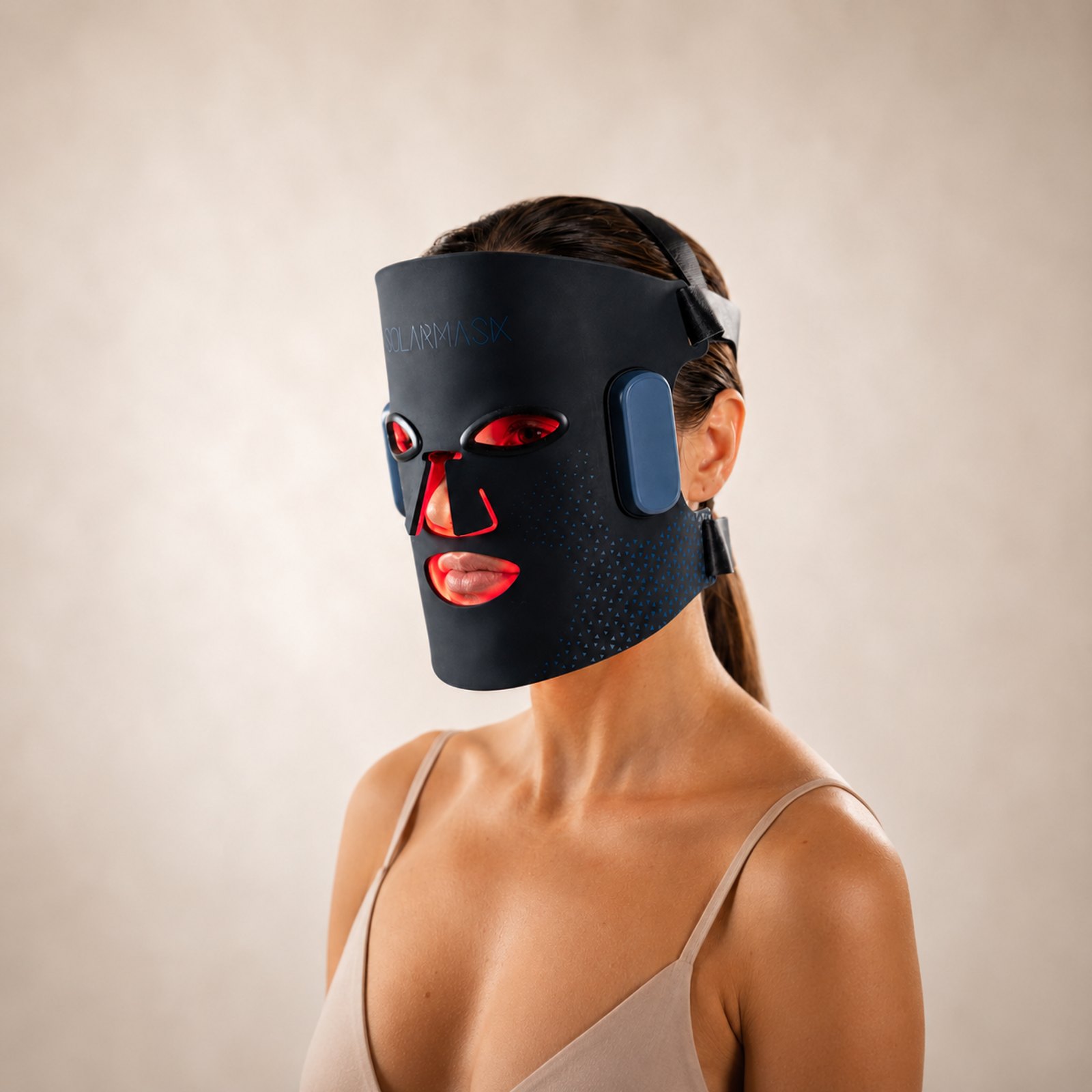
Read the full article on purple light →All five wavelengths are contained in a single mask.
View the SolarMask LED Mask →Professional appliances vs. domestic appliances
Professional devices deliver higher power levels (40–150 mW/cm²) than most home devices (1–30 mW/cm²), leading to faster results in fewer sessions (Turner, 2025). However, home devices often work better for long-term results — and the reason is simple: consistency beats speed.
Research shows that the real benefits of LED therapy do not come from a few intense sessions, but from regular, consistent use over time (Lee et al., 2007; Ablon, 2018). Think of it like exercise: one intense workout helps, but training three times a week is what really builds your body.
The benefits of home use:
- ✓Consistency: Treat yourself at home 3–5 times a week without the need for appointments, travel or waiting.
- ✓Long-term compliance: regular use at home yields better results than occasional clinic visits.
- ✓Cost-effective: a home device is a one-off purchase; a clinic costs €50–200 per session.
- ✓Control: you decide on your own treatment plan and adapt it to suit your needs.
A systematic review concluded that home LED therapy, provided it is used regularly and employs high-quality LEDs with sufficient power density, is just as effective as professional devices (Cios, 2021; Turner, 2025). The key is consistency: 2–3 times a week, week after week.
Measured, not promised: the light intensity of SolarMask
Manufacturers often advertise the theoretical LED output — what the diodes could deliver at most. That says little about what your skin actually receives. That is why we had the SolarMask measured by an independent laboratory (HP350FR spectrometer), per light programme:
| Light programme | Peak wavelength | Measured intensity | Dose per session (15 min) |
|---|---|---|---|
| Purple (red + blue) | 461 / 630 nm | 66,2 mW/cm² | 59,6 J/cm² |
| Blue | 458 nm | 34,5 mW/cm² | 31,1 J/cm² |
| Red | 640 nm | 28,6 mW/cm² | 25,7 J/cm² |
| Near-infrared | 854 nm | 18,7 mW/cm² | 16,8 J/cm² |
| Yellow | 595 nm | 8,6 mW/cm² | 7,7 J/cm² |
This places SolarMask at the top of the home-device category (most home devices deliver 1–30 mW/cm²), while the dose per 15-minute session falls within the window used in clinical studies. More is not better here: beyond the optimal dose, the effect does not increase further (biphasic dose response).
The measurements complement the CE documentation of the mask (RoHS, EMC and LVD declarations of conformity). Business partners can request the measurement values and declarations via contact@solarmask.eu.
The Safety of LED Light Therapy: Fact and Fiction
The short answer: yes, very safe, provided it is used correctly.
LED light does not use ionising radiation (such as UV or X-rays). It does not damage your DNA and does not cause cancer (Colaz, 2025). Instead, it naturally stimulates your cells to produce more energy — something your body already does.
Most studies report no serious side effects; the Cleveland Clinic states that "serious side effects are rare" (Cleveland Clinic, 2025). Possible mild side effects associated with excessive use:
- ✓Mild redness or a sensation of warmth (usually disappears within 24 hours)
- ✓Mild dryness (very rare)
- ✓Eye strain when looking into the light (which is why eye protection is built in)
How to prevent side effects:
- ✓Please stick to the recommended usage time: 15 minutes per session (SolarMask has a fixed 15-minute auto-timer), no longer.
- ✓Stick to the recommended frequency: 3–5 times a week, not every day without a rest day.
- ✓Do you have very sensitive skin? Start with a shorter duration and build up gradually.
Special groups — if you are pregnant, taking light-sensitive medication, have a history of cancer or suffer from eye problems: consult your doctor first. For most healthy people, LED therapy is completely safe when used as intended.
Conclusion: a scientifically informed choice
LED light therapy is not just a pipe dream — it is scientifically proven, clinically validated and safe. Our five wavelengths have not been chosen at random, but are the result of years of research, clinical trials and practical application:
- ✓630 nm red light — the most proven wavelength for skin rejuvenation
- ✓450 nm blue light — a commonly used wavelength for visible blemishes
- ✓580 nm yellow light — ideal for sensitive skin and pigmentation
- ✓850 nm near-infrared — penetrates deeply and stimulates thorough regeneration
- ✓Purple (red + blue) — mixed benefits for complex skin problems
With regular use (3–5 times a week, 15 minutes per session), you can expect:
- ✓After 2–4 weeks: reduced acne and less redness
- ✓After 4–8 weeks: visible improvement in skin texture and a reduction in fine lines
- ✓After 8–12 weeks: significant improvement in wrinkles, elasticity and radiance
- ✓After that: 1–2 times a week to maintain the results
Your skin already has all the tools it needs. LED light simply gives it the energy to make the most of those tools.
Frequently Asked Questions
What is photobiomodulation (LED light therapy)?
Photobiomodulation (PBM) is a non-invasive treatment in which specific LED wavelengths activate the mitochondria in skin cells. This increases ATP production, enabling cells to recover more quickly, produce more collagen and reduce inflammation. SolarMask uses five proven wavelengths: 630 nm red, 450 nm blue, 580 nm yellow, 850 nm near-infrared and purple (combination).
How deep does LED light penetrate the skin?
Blue light (450 nm) penetrates 1–2 mm into the epidermis. Red light (630 nm) reaches a depth of 4–5 mm into the dermis. Near-infrared light (850 nm) penetrates the deepest — 5–10 mm, reaching the subcutaneous fat and connective tissue.
What clinical results have been proven for LED light therapy?
Clinical studies show: up to 36% reduction in wrinkles with 630+850 nm after 12 weeks (Lee et al., 2007); up to 75% improvement in acne after 8 weeks of blue light (Lee et al., 2007); up to 23% reduction in melasma after 8 weeks of yellow light (Dai et al., 2022); 45–47% reduction in acne lesions in a meta-analysis of 6 studies (Barbieri et al., 2025).
Is LED light therapy safe?
Yes. LED therapy uses non-ionising radiation — no UV, no DNA damage. The Cleveland Clinic states that serious side effects are rare. The SolarMask is CE-certified.
Is LED therapy at home just as effective as in a clinic?
A systematic review concluded that, when used regularly, home LED therapy is just as effective as professional devices, provided the quality is adequate. Consistency (3–5 times a week) is key.
Bibliography (18 courses)
- — Ablon, G. (2018). Photobiomodulation in the treatment of skin aging and other disorders: A review. Journal of Photomedicine and Laser Surgery, 36(6), 293-301.
- — Ash, C., Dhawan, U., McDaniel, D., & Basford, J. R. (2017). Effect of wavelength and beam width on penetration in light-emitting diode light therapy. Lasers in Medical Science, 32(2), 429-434.
- — Barbieri, J. S., Kohli, I., & Nattkemper, L. A. (2025). Light-emitting diode phototherapy for acne vulgaris: A systematic review. The Dermatology Digest.
- — Cios, J. M. (2021). Optimizing low-level light therapy for skin rejuvenation. SCIRP Journal, 142513.
- — Cleveland Clinic. (2025). LED light therapy: How it works, colors, benefits & risks. my.clevelandclinic.org
- — Colaz. (2025). Can LED light therapy cause cancer: 6 risk factors. colaz.co.uk
- — Curtis, B. J., Radcliffe, C. R., & Sloan, K. B. (2013). Phototherapy for skin conditions: A review of the evidence. Journal of the American Academy of Dermatology, 68(4), 675-690.
- — Dai, X., Jiang, L., Wang, R., Li, M., & Chen, J. (2022). 590 nm LED irradiation improved erythema through inhibiting angiogenesis via the AKT/PI3K/mTOR pathway. Biomedicines, 10(12), 3168.
- — Dompe, C., et al. (2020). Photobiomodulation — Underlying mechanism and clinical applications. Journal of Clinical Medicine, 9(6), 1724.
- — Hamblin, M. R. (2018). Mechanisms and mitochondrial redox signaling in photobiomodulation. Photochemistry and Photobiology, 94(2), 199-212.
- — Lee, S. Y., et al. (2007). A prospective, randomized, placebo-controlled, double-blinded, split-face clinical study on LED phototherapy for skin rejuvenation. Journal of Photochemistry and Photobiology B, 88(1), 51-67.
- — Liang, Y., Quan, K. L., & Liu, Y. (2022). The combination of red and blue light, radiofrequency, and other modalities for acne treatment. Dermatologic Surgery, 48(11), 1372-1380.
- — Liebmann, J., Born, M., & Kolb-Bachofen, V. (2011). Blue-light irradiation regulates proliferation and differentiation in human skin cells. Journal of Investigative Dermatology, 130(1), 259-269.
- — Park, S. H., et al. (2025). Clinical study to evaluate the efficacy and safety of home-use LED phototherapy at 630 nm and 850 nm for skin rejuvenation. Journal of Clinical Medicine, 14(2), 445.
- — Ryu, J. H., et al. (2022). Exploring the effects of 630 nm wavelength of light on human tendon fibroblast cells: An in vitro study. Photomedicine and Laser Surgery, 40(8), 509-517.
- — Sadowska, M., Narbutt, J., & Pawlaczyk, M. (2021). Blue light in dermatology: An update. Journal of Cosmetic Dermatology, 20(7), 2000-2009.
- — Turner, D. R. (2025). At-home LED masks vs. professional in-clinic LED therapy. drturner.com.au
- — Weiss, R. A., McDaniel, D. H., Geronemus, R. G., & Munavalli, G. M. (2005). Clinical experience with light-emitting diode (LED) phototherapy. Dermatologic Surgery, 31(9S), 1199-1205.

Recommended by Dr. Farah MacDonaldPhysician & skin specialist
Disclaimer: This overview is for information purposes only and does not constitute medical advice. Always consult your GP or dermatologist before starting a new treatment regimen, particularly if you have an underlying skin condition or are taking light-sensitive medication.
Ready to experience it for yourself?
The SolarMask LED mask incorporates all five wavelengths from this study.
View the SolarMask LED Mask →